When Should I Consider Orthotics for My Child?
If you’re wondering whether your child needs orthotics, here are the signs I wish I’d known to look for earlier:
Signs Your Child Might Need Orthotics:
- Ankles rolling inward when standing (over-pronation in children)
- Complaints of tired, aching legs after activity or sport
- Heel pain, especially during growth spurts (Sever’s Disease is common in active kids aged 8-14)
- Knee pain in children, particularly around ages 10-15
- Flat feet in children that persist past age 7-8 without developing an arch
- Difficulty keeping up with peers during physical activity due to foot fatigue
- Foot pain after sports or activities
The earlier you spot over-pronation or flat feet issues, the better. Children’s feet are still developing between 4 and 8 years old, making this the ideal window for supporting proper foot alignment with orthotics.
How Do I Know if My Child Has Over-Pronation?
This is the simple check I do with my kids regularly. You don’t need a podiatrist to spot the basic signs of over-pronation in children.
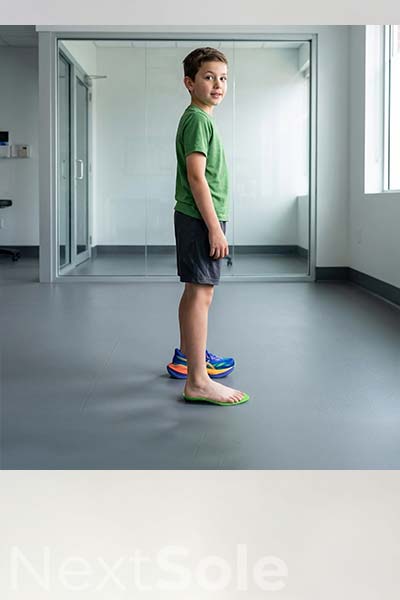
Have your child stand barefoot on a flat surface. Look at their ankles from behind. Imagine drawing a line straight down from the ankle bone to the ground. If that line falls outside the edge of the foot, the ankle is rolling inward excessively – that’s over-pronation.
When my son stands normally, I can see his ankle bones leaning inward and a gap between his inner foot and the floor. That visual check was enough for me to know he needed arch support.
If you’re unsure or the over-pronation seems severe, a podiatrist can give you a proper assessment.
Will My Child Need Orthotics Forever?
This worried me too. I didn’t want my kids dependent on orthotics for life.
Not necessarily. For some children, orthotics provide support during critical growth phases between 4-8 years old and can be discontinued later once foot development stabilises. For others with persistent biomechanical issues like ongoing over-pronation or flat feet, long-term use of children’s orthotics might be beneficial.
Think of it like this: some kids need glasses temporarily whilst their eyes develop, others need them permanently. Same principle applies to foot support.
Regular assessment every 12-18 months can determine ongoing needs as your child grows. My approach has been to reassess annually and see whether the foot alignment has improved.
Can My Child Play Sports Whilst Wearing Orthotics?
Absolutely. In fact, children’s orthotics can improve sports performance by reducing foot fatigue, preventing injuries like Sever’s Disease, and allowing proper alignment during activity.
Many children find they can play sports or run longer distances with less discomfort when wearing appropriate foot support. My son actually prefers wearing his orthotics during basketball now because his feet and legs don’t get as tired.
Quality over-the-counter orthotics designed for sports are slim enough to fit in most athletic shoes without crowding the foot. Just make sure the shoes have removable insoles so you can replace them with the orthotics.
How Long Does It Take for Kids to Adjust to Orthotics?
Most children adjust to wearing orthotics within a few days to two weeks. There’s typically a break-in period where the orthotics feel different or noticeable, but this is normal as feet, ankles, and legs adapt to better alignment.
Start with 1-2 hours of wear per day in comfortable shoes, then gradually increase over 1-2 weeks. My kids stopped noticing their orthotics after about four days and now wear them all day without any complaints.
Do Children’s Orthotics Really Work for Flat Feet and Over-Pronation?
Children’s orthotics won’t permanently “fix” flat feet – they work more like glasses for your child’s eyes. They help feet function properly whilst wearing them by supporting the arch and correcting over-pronation.
The benefit during those critical growth years between 4-8 is that orthotics can help feet develop with better mechanics, potentially reducing problems down the track like heel pain, knee pain, and foot fatigue.
After six months of my son wearing over-the-counter orthotics, his ankles weren’t collapsing inward as much, and he had no heel pain during basketball season. For us, they absolutely worked.
Should I Buy Custom Orthotics or Over-the-Counter Orthotics for My Child?
There’s no research proving custom orthotics outperform quality over-the-counter options for most children with common issues like flat feet, over-pronation, or foot fatigue.
Over-the-counter children’s orthotics cost $30-$50 versus $300-$500 for custom orthotics. For most kids, the affordable option works just as effectively.
Custom orthotics might be worth considering only if your child has severe foot deformities, specific medical conditions, or quality over-the-counter options haven’t helped after several months.
I went with over-the-counter orthotics and saved hundreds of dollars with the same results.
What’s the Difference Between Insoles and Orthotics for Children?
Regular insoles are just cushioned padding – the squishy gel pads from the chemist. They make shoes more comfortable but don’t change how your child’s foot functions or address over-pronation.
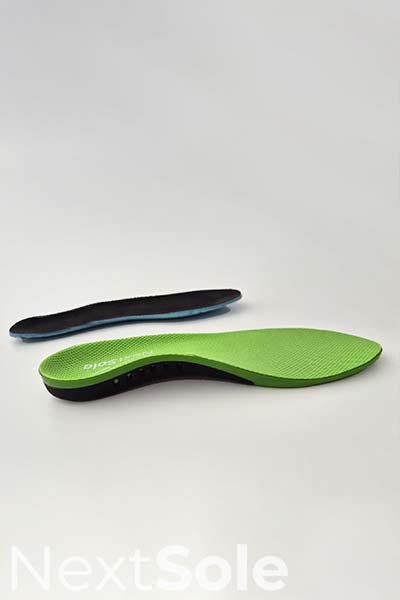
Children’s orthotics are designed to influence foot movement, redistribute pressure, and improve alignment. They affect biomechanics – how the foot, ankle, and leg work together during walking and running.
If your child has flat feet or over-pronation, regular insoles won’t help. You need actual orthotics that provide arch support and control foot movement.
The Bottom Line for Parents on Children’s Orthotics
Not every child needs orthotics. Some children have naturally excellent foot mechanics and develop proper arches without intervention.
But if your child shows signs of over-pronation, experiences foot pain or leg fatigue, has heel pain from Sever’s Disease, or has persistent flat feet past age 7-8, orthotics can be a simple, affordable preventative measure.
The Key to Preventing Foot Problems in Children
Catch issues early, whilst feet are still developing, rather than waiting for pain or problems to develop. A small investment now in proper foot support with children’s orthotics could prevent larger issues like chronic heel pain, knee pain, or foot fatigue down the track.
That’s what I did for my kids, and I wish another parent had told me about this sooner. Check your child’s ankles for over-pronation. If you see that inward roll, starting with affordable over-the-counter orthotics might be worth considering.
No medical advice – just sharing what worked for us and what I learned about children’s foot health, orthotics, flat feet, and over-pronation. If you’re concerned about your child’s specific situation, a podiatrist can give you proper professional assessment.